
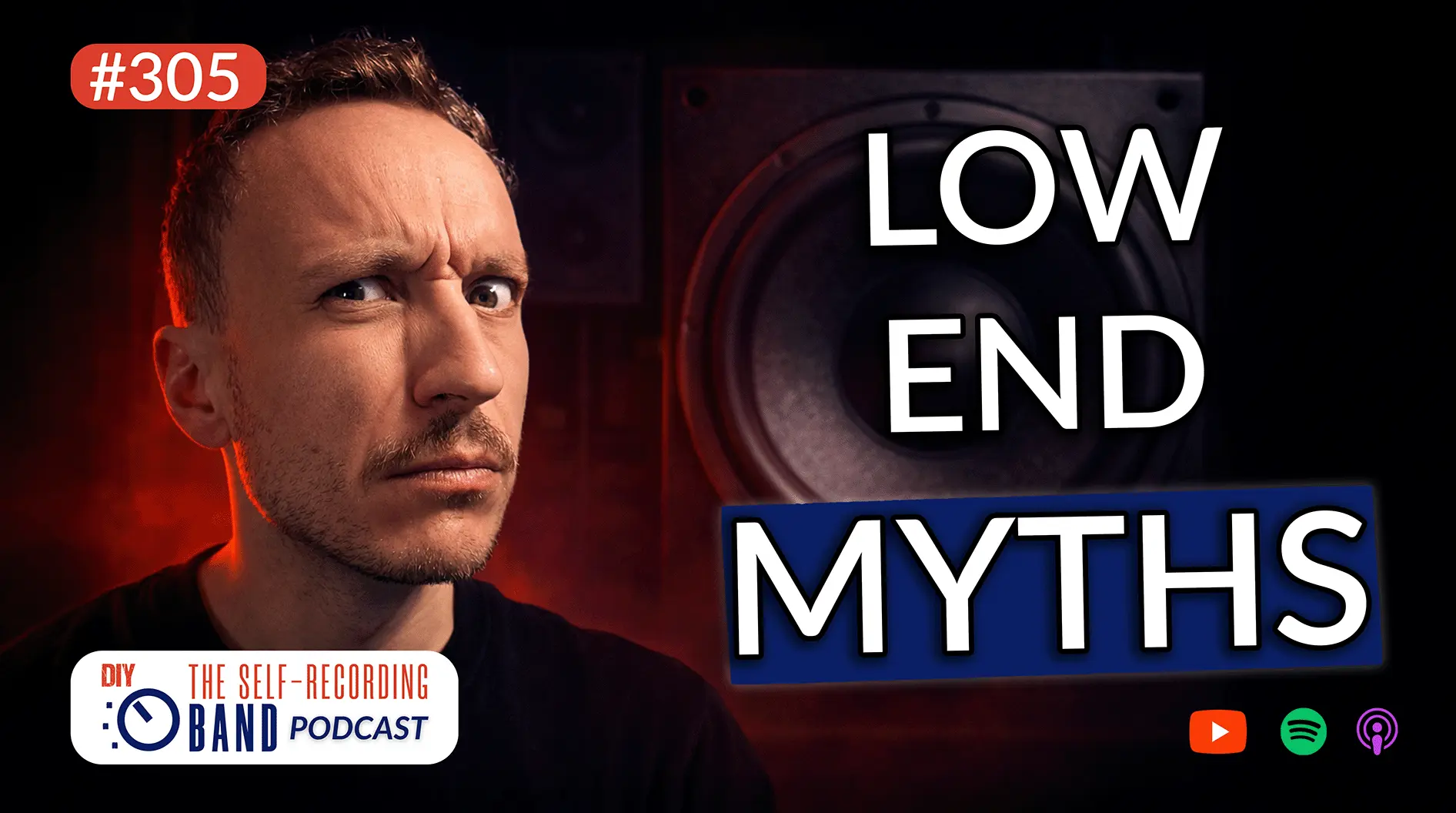
Most of the low end advice online sounds clean, structured, and logical.
But it also makes a lot of mixes smaller.
In this episode, Benedikt and Manel break down five common low end mixing myths.
More...
You've hit a wall with your audio skills and can't seem to improve your sound, no matter what you do?
Figure out if you are a great fit for The Self-Recording Syndicate!
Our incredible coaching community and platform is the number one way for DIY producers around the world to get results that they'll be proud of forever.
- Grow your audience with songs that don't sound "demo-y".
- Be taken seriously by your peers, fans and other musicians.
- Make records that sound as good as your favorite songs in your playlist.

Here's how to get there:
Apply for unlimited, personal 1-on-1 mentoring (results guaranteed) - This is by far the fastest and best way to achieve your goals. Your gonna be working 1-on-1 with an experienced studio pro until your project is done. On your own songs, from your (home) studio and in your DAW of choice.
This is not a “never do this" episode.
It’s about understanding what’s really happening in the low end so you stop fixing problems you don’t actually have.
🎯 The 5 Low End Mixing Myths We Break Down
1. “If the kick fundamental is at 60Hz, cut the bass at 60Hz.”
2. “The bass needs to live above or below the kick.”
3. “High-pass everything except kick and bass.”
4. “Below 100Hz there can only be kick and bass.”
5. “You must carve out space or they’ll mask each other.”
🔑 What Actually Makes Low End Work
1. It Starts at the Source
- Drum choice and tuning
- Sample choice
- Bass instrument choice
- String choice
- Performance
- Timing
- Arrangement
- Key of the song
If you pick the right sounds, faders alone often get you 80% there.
2. Think in Terms of Energy
Low end is about:
- Relative amounts of energy
- Transient interaction
- Sustain overlap
- Glue vs separation
- Context with mids and highs
Sometimes the problem isn’t in the low end at all.
Sometimes it’s guitars masking kick attack.
Sometimes it’s too much midrange hiding bass character.
3. Timing Changes Everything
Slightly offset bass timing can:
- Reduce low end buildup
- Extend groove feel
- Increase clarity
Impact is often about transient alignment, not EQ moves.
4. Control Buildup Dynamically
Instead of static carving, try:
- Multiband compression
- Dynamic EQ
- Transient shaping
- Shortening sustain
Control the moments where energy spikes — don’t gut the whole instrument.
5. Stop Fixing Problems You Don’t Have
This might be the most important takeaway.
If it sounds good, don’t “optimize” it.
🚀 Want Direct Help With Your Mix?
Inside The Self-Recording Syndicate, we help self-recording rock, metal and indie artists build mixes that feel powerful and emotionally right — without mixing by numbers.
You get:
- A custom step-by-step music production plan
- Unlimited personal feedback
- Clear next actions
- Ongoing guidance
- All the resources you need to fill in knowledge gaps and become confident in your recording and mixing abilities
Apply here:
👉 theselfrecordingband.com/coaching
Free first call. Money back guarantee. No pressure.
Ready To Transform Your Sound And Workflow?

Apply for professional mentoring and book a free clarity call with Benedikt to see if our programs are a great fit for you!
Recommended Free Downloads:
Standout Mixes – The DIY Musician’s Guide To Exciting Mixes That Connect
TSRB Free Facebook Community:
Mentioned On the Episode:
The Self-Recording Syndicate (Our Coaching Program):
Learn how to make pro quality records from your home studio: theselfrecordingband.com/coaching
Related Episodes:
247: Get It Right At The Source (Live Workshop At Studioszene)
304: Are You Learning From Audio Pros Or YouTubers? (The Mixing Advice That Actually Matters)
Our Links:
Outback Recordings (Benedikt's Mixing Studio and personal website)
Manel's Website
TSRB Instagram
Benedikt's Instagram
Manel's Instagram
If you have any questions, feedback, topic ideas or want to suggest a guest, email us at: podcast@theselfrecordingband.com